


Blog Post
Posted by Dion Todd April 6th, 2026 2,570 Views 52 Comments
He Is Alive from Refreshing Hope Ministries on Vimeo.
The Garden
It was late Thursday night. Jesus and eleven of His apostles had just left the upper room after the Last Supper. Judas Iscariot, the twelfth, had already slipped out into the dark to collect his thirty pieces of silver from the chief priests. It was the price of a slave. That is what they paid for the Son of God.
Jesus led the remaining eleven out to the Mount of Olives, to a garden called Gethsemane. He had gone to pray there many times before, so Judas knew exactly where to find Him.
But before the soldiers came, Jesus pulled away from the group, knelt down in the dirt, and prayed. Not a polished, standing-upright, hands-folded prayer. He was on His knees, pouring sweat so hard that Luke, who was a physician, recorded that it fell like great drops of blood to the ground. The Greek is careful here. Luke does not say it was blood. He says it was like blood. Either way, Jesus was a man in genuine, physical, crushing agony.
He went back and prayed the same prayer three times:
And He was withdrawn from them about a stone's throw, and He knelt down and prayed, saying, "Father, if it is Your will, take this cup away from Me; nevertheless not My will, but Yours, be done." Then an angel appeared to Him from heaven, strengthening Him. And being in agony, He prayed more earnestly. Then His sweat became like great drops of blood falling down to the ground. (Luke 22:41-44 NKJV).
Though the Father would do anything for His Son, He did not remove the cup. He sent an angel to strengthen Him instead. So Jesus got up, walked back to His disciples, and found them asleep. Then the torches appeared.
The Arrest
Judas Iscariot, one of His twelve Apostles, came leading a crowd of soldiers and temple officers. He walked straight to Jesus and kissed Him on the cheek. That was the signal that this is the One. A kiss, which in that culture meant friendship, esteem, and love, but that night was used to hand the Son of God over to be killed. Jesus looked at Judas and said:
"Judas, are you betraying the Son of Man with a kiss?" (Luke 22:48 NKJV).
The Apostle Peter pulled out a sword and took a swing. He hit a servant of the high priest, who was named Malchus, and cut off his right ear. Peter was probably aiming for his head. Jesus stopped the whole thing cold. He reached out, touched the man's ear, and healed him. So that man, who came to arrest Jesus, went home that night with both ears intact, because of Jesus. Then they led Him away.
The Trials
What followed was one of the most corrupt legal proceedings in human history. Jesus was dragged through six separate hearings between Thursday night and Friday morning. First to Annas, the previous high priest. Then to Caiaphas, the current one. Then to the full Sanhedrin, the Jewish court system, at dawn. Then to Pilate, the Roman governor. Then to Herod, the puppet ruler of Galilee. Then back to Pilate again.
Though Jewish law prohibited capital trials at night, they held one anyway. Jewish law required a guilty verdict to wait one full day before execution, to allow for mercy. They ignored it. Jewish law required two separate witnesses whose testimony agreed. The witnesses they brought contradicted each other openly, in the same room, and nothing was done about it.
Pilate examined Jesus and said plainly: "I find no fault in this Man." (Luke 23:4 NKJV).
He said it three times. Three times, Pilate declared Jesus innocent. He tried to release Him through the Passover prisoner custom. The crowd demanded Barabbas instead. Barabbas was a murderer. So the one guilty of death went free, and the innocent Man took his place.
That wasn't an accident. That sums up the gospel in a single transaction.
The Scourging
Before the crucifixion, Roman law required scourging. They tied Jesus to a post, exposed His back and chest, and a soldier took a whip made of several leather strands, each one sewn with sharp pieces of sheep bone and heavy iron balls along its length. The straps were designed to wrap around the body, the bone fragments digging into flesh, the iron balls causing deep internal bleeding. Then the soldier ripped it back, taking meat with it.
The Jewish law capped it at thirty-nine stripes, but the Romans had no such rule.
Isaiah wrote about this seven hundred years before it happened:
His appearance was marred more than any man And His form more than the sons of men. (Isaiah 52:14 NASB).
The scourge had done its work. Ribs were exposed. His face had been beaten with a mock scepter until His features were unrecognizable. They pressed a crown of heavy thorns onto His head, put a purple robe on Him to mock Him, and brought Him back out in front of the crowd.
Even then, Pilate tried one more time to release Him, but the crowd shouted Him down.
The Cross
They crucified Jesus at 9 AM on a Friday morning, on a hill called Calvary, just outside the walls of Jerusalem. Two criminals were crucified alongside Him, one on each side.
The soldiers nailed Jesus to the cross. When the nails drove through His wrists, they severed the median nerve, sending bolts of fire up both arms. They nailed His feet with His legs slightly bent so He had to push up to breathe. Every breath required pushing against the nails in His feet and pulling from His wrists. Every breath scraped His shredded back against the rough wood behind Him. Suffocation was the primary cause of death in crucifixion. The body simply ran out of the strength to breathe.
Above His head, Pilate had a sign nailed that read:
JESUS OF NAZARETH, THE KING OF THE JEWS.
The chief priests demanded he change it, but Pilate said: "What I have written, I have written." (John 19:22 NKJV).
The soldiers gambled for His clothing at the foot of the cross while He bled above them. David wrote that too, a thousand years earlier, in Psalm 22.
They pierced My hands and My feet; I can count all My bones. They look and stare at Me. They divide My garments among them, And for My clothing they cast lots. (Psalm 22:16-18 NKJV).
One of the criminals being crucified alongside Him mocked Him. The other one rebuked the first, admitted his own guilt, and said:
"Lord, remember me when You come into Your kingdom." (Luke 23:42 NKJV).
Jesus, who was struggling for every breath, answered him:
"Assuredly, I say to you, today you will be with Me in Paradise." (Luke 23:43 NKJV).
That man had nothing. No baptism. No church membership. No track record of good works. He had a criminal conviction and a few hours left to live. He asked Jesus to remember him, and Jesus took him home.
At noon, darkness covered the land. Not clouds. Darkness. For three hours, the sky went black over the cross. Amos had prophesied it:
"And it shall come to pass in that day," says the Lord GOD, "That I will make the sun go down at noon, And I will darken the earth in broad daylight; (Amos 8:9 NKJV).
In those three dark hours, the sin of the world was poured onto Jesus. Every lie. Every act of violence. Every broken marriage. Every addiction. Everything you have ever done that you are ashamed of. It was all laid on Jesus.
According to Luke, at 3 PM, Jesus cried out with a loud voice:
"Father, into Your hands I commit My spirit." (Luke 23:46 NKJV).
And He was gone.
The Veil
At the moment Jesus died, something happened inside the temple in Jerusalem.
The Holy of Holies was the innermost room of the temple. It was where the presence of God dwelt. It was separated from the rest of the temple by a veil, a curtain as thick as a man's hand, woven from expensive Babylonian yarn in blue, white, red, and purple, with images of cherubim worked into the fabric. It was enormous. Only the high priest could pass through it, and only once a year, on the Day of Atonement. Any other person who entered the Holy of Holies died.
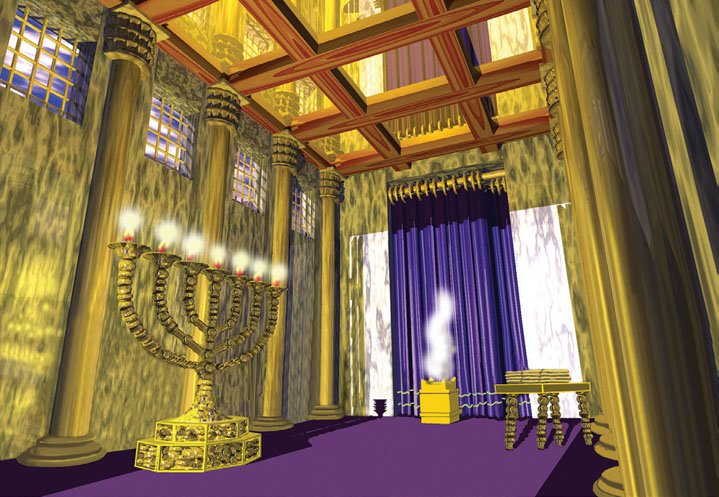
The moment Jesus said, "It is finished" and breathed His last, God reached down from heaven and tore that veil in two. Not from the bottom up, the way a man would tear it, but from the top down. God did it, and the wall came down.
"Then, behold, the veil of the temple was torn in two from top to bottom..." (Matthew 27:51 NKJV).
Every person who had ever stood in that temple and looked at that veil understood what it meant. You cannot go in there. God is in there, and you are not welcome. Your sin disqualifies you. Not anymore.
Jesus took your sin onto Himself, was judged for it, and died under the full weight of God's wrath so that you would never have to. He wore your sin so that you could wear His righteousness. The wall that separated us from God is gone. The way is open. You do not need a priest to go to God for you. You can boldly come before His throne yourself because of what Jesus did. That is what the torn veil means.
The Tomb
Joseph of Arimathea, a wealthy member of the Sanhedrin who had not consented to the execution of Jesus, went to Pilate and asked for the body. He wrapped Jesus in linen with about a hundred pounds of myrrh and aloes, and laid Him in a new tomb cut from rock, one that had never been used. They rolled an enormous stone into the channel in front of the entrance and sealed it with the authority of Rome. A guard of Roman soldiers was posted to keep watch.
The Sabbath began at sundown on Friday and ran through Saturday. The faithful women who had followed Jesus all the way from Galilee prepared spices and ointments and rested, planning to return Sunday morning. When Sunday morning came, before dawn, they went back to the tomb.
They found the stone was already rolled away. Matthew tells us what happened:
And behold, a severe earthquake had occurred, for an angel of the Lord descended from heaven and came and rolled away the stone and sat upon it. And his appearance was like lightning, and his clothing as white as snow. The guards shook for fear of him and became like dead men. (Matthew 28:2-4 NASB).
One angel. That is all it took, and the battle-hardened Roman soldiers who had nailed Jesus to the cross and gambled for His clothes while He bled, looked up at that angel and dropped like dead men. Not one of them put up a fight, for they all shook in fear and fainted.
The women went inside the tomb. The body of Jesus was gone. Two angels in dazzling clothing stood inside and asked them:
"Why do you seek the living among the dead? He is not here, but is risen!" (Luke 24:5-6 NKJV).
Peter and John ran to the tomb when they heard. John got there first but stopped at the entrance. Peter went straight in. They found the linen grave clothes lying there, flat, undisturbed. The face cloth was folded and set aside. Not scattered. Not torn away in a hurry, but neatly folded. Because He didn't need them anymore.
Jesus appeared first to Mary Magdalene, outside the tomb. She thought He was the gardener until He said her name. Then she recognized Him. He appeared to two disciples on the road to Emmaus, walking beside them for miles, opening scripture to them, and they did not recognize Him until He broke bread at their table. He appeared to the eleven apostles in a locked room, showed them His hands and His feet, and ate broiled fish and honeycomb in front of them to prove He was not a ghost. He appeared to more than five hundred people at one time, according to Paul in (1 Corinthians 15:6).
Jesus was not a ghost. He was not a vision. He was not a symbol or a feeling. He was a living man with nail marks in His wrists and a spear wound in His side, eating breakfast on a beach with His disciples.
He Is Alive
The resurrection is not a religious holiday. It is not a tradition. It is a historical fact with more eyewitness testimony behind it than most events of the ancient world.
Here is what it means for you today:
The grave could not hold Him. That means death does not get the final word, not for Him, and not for you if you belong to Him.
The veil is torn. That means the wall between you and God is gone. Not thinned out. Not cracked. Gone. You can come to God directly, right now, exactly as you are, because Jesus already paid the price that the law required.
Jesus is not on the cross anymore. He is not in the tomb, and He is not a baby in a manger. He ascended to the right hand of the Father, and He is alive this morning.
The two angels at the tomb asked the women a question that still stands:
"Why do you seek the living among the dead?"
Stop looking for Jesus in dead religion, dead tradition, and dead ritual. You will not find Him there. You find Him where there is life.
And there is life, because on the third day, God raised Him from the dead.
He is alive, forevermore.
You can pray this with me if you like:
Prayer: Heavenly Father, thank You for sending Your Son, for the cross, for the torn veil, and for an empty tomb. Jesus paid a price I can never repay, and He did it willingly. Lord, help us remember that Resurrection Sunday is not a holiday or a tradition, but a fact that changes everything. He is alive. Let us remember that today. In the name of Jesus Christ, I pray. Amen!
Note: For those interested, all are welcome to join any of our small groups! To join, just click on the group name and then the join link on the page that will follow. The Creation Photographers group welcomes any photos that may inspire you, but if you'd like ideas, think of the new life! As always, if you have a prayer need, we are here for you! We and the prayer team are ready to lift you up at our private prayer page: RHM Prayer Network.
This blog post has an accompanying Bible quiz: He is Alive